
Lyme disease is a bacterial infection found throughout the United States and every continent except Antarctica. More than 475,000 Americans are diagnosed every year, but experts believe it is much higher. Lyme disease is treatable, but symptoms are often misdiagnosed as other conditions. Without treatment, the infection can progress into more severe symptoms. Guarding your family against Lyme disease involves a little surveillance and a good plan of defense.
The Best Offense is a Good Defense
Protecting your family from Lyme disease is a multi-faceted approach. To begin, you need to know how the infection occurs. Lyme disease is caused by a corkscrew-shaped bacterium called Borrelia burgdorferi transmitted through the bite of an infected black-legged tick. Avoiding contact with this type of tick is the ultimate goal in a combination of the following measures:
- Surveillance: Check recent surveillance maps of cases reported in your area to see where the infection rate is more widespread. Remember, these are only cases reported, so the map data can only go so far.
- Avoiding Hot Spots: The ticks that can cause Lyme disease mainly live in wooded, bushy areas with long grass. Avoid walking in these areas.
- Repellants, Clothing Care, and Self-Checks:
- Repellants– Use one with a DEET concentration of 20% or higher. Apply products with permethrin to clothing or buy pretreated materials.
- Clothing Care– When in tick hot spots, wear long-sleeved shirts, hats, and gloves. Removed clothing immediately once home and wash and dry on high heat.
- Self-checks– Shower as soon as you get home with a washcloth to remove any unattached ticks. Check your body from head to toe. Underdeveloped ticks called nymphs are the primary transmitters and are about the size of a poppy seed, so look carefully.
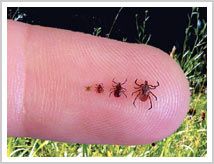

Adopting these steps should reduce your chances of Lyme disease significantly. If you discover a tick has attached itself, it will be early and mostly means it didn’t have the 3-4 days it needs to transmit the infection. Even so, alert your provider immediately and keep a lookout for symptoms. You can find a checklist of common symptoms here.
Improving Detection
There is currently no test determining whether a patient has an active infection or whether the infection has been eliminated by treatment. Available lab tests help identify antibodies to the bacteria, which your body takes a few weeks to make after an infection. This makes early diagnosis difficult with lab tests alone, so symptom history, tick prevalence in the area, and other factors are used to close the gap in diagnosis accuracy.
Potential new detection options are under evaluation in clinical research studies, and we need your help! ActivMed Practices & Research is currently seeking participants aged seven and older to join enrolling Lyme disease studies. Individuals currently experiencing Lyme disease symptoms have recently been diagnosed, and those with no prior history of Lyme Disease are welcome to apply.

The studies are being conducted at our Methuen, MA, Beverly, MA, and Portsmouth, NH locations. Click here to select your preferred clinic location, view additional information, and application submission.
Sources:
https://www.mayoclinic.org/diseases-conditions/lyme-disease/symptoms-causes/syc-20374651
https://www.lymedisease.org/lyme-basics/lyme-disease/about-lyme/