
Overview of Depression
Dealing with depression may feel like you constantly battle with a heavy burden or a shadow of sadness and hopelessness that latches on to you for a long time. Getting out of bed seems like a chore, you may no longer have the same amount of interest in activities as you used to, and often you may just want to be left alone. Maybe you feel that the only person who understands you is yourself. That’s understandable. Depression is an illness, NOT a weakness, and you are not to blame for it.
Depression is the most common mental disorder in the country. Millions of Americans suffer from some form of depression every year. That being said, you are not alone. There are many resources to help including free screenings, therapy, support groups, exercising, and many more. However, admitting that you want help is the first step to living a happier and healthier life.
National Depression Screening Day takes place in October. To view the post discussing this, click HERE.

Depression Statistics
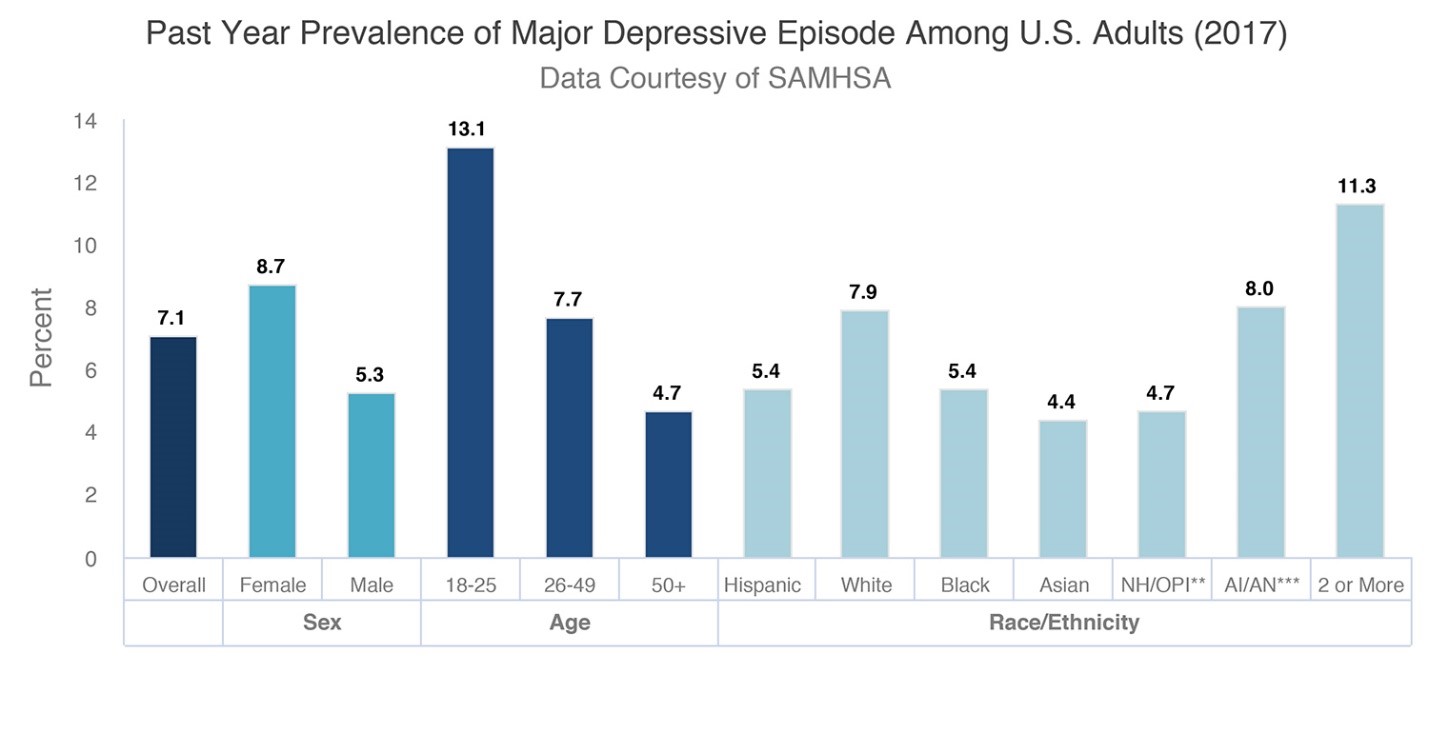
Below is a chart of the percentage of U.S. Adults who have dealt with depression in 2017. The variables range from gender, age, race/ethnicity. Based on the results, most of the people experiencing this major depressive episode were in the 18-25 age range and were identified females. This is not to say that people of other age groups or identified genders are not affected just as much.
Possible Causes of Depression
There is truly not one cause for depression. It depends on a unique combination of an individual’s genetic makeup and environmental conditions.
For instance:
- The brain’s physical structure or chemistry
- History of depression in the family
- History of other disorders (anxiety, post-traumatic stress disorder)
- Stressful, traumatic events (abuse, constant rejection, death of a loved one, financial issues)
- Hormone changes (menstrual cycles, pregnancy)
- Certain medications (sleeping aids, blood pressure medication)
Signs to Look For
Most common signs and symptoms of depression:
- Loss of interest in activities that were once enjoyable
- Fatigue and lack of energy
- Appetite or weight changes
- Physical symptoms such as headaches, stomachaches, or back pain
- Recurrent thoughts of suicide
- Difficulty sleeping, sleep disturbances, and/or having a hard time getting out of bed
- Difficulty thinking clearly, making decisions, or concentrating
- Feelings of isolation or wanting to be isolated for long periods of time
Available Treatment Options
- Sign up for a clinical trial and/or free screenings for depression
- Therapy – speaking with a psychologist
- Medication
- Exercise (physical and mental), Yoga, Meditation
- Keeping a journal (writing down your thoughts instead of bottling them up)
- Write short and long-term goals for yourself
- Calling a depression hotline if you don’t feel comfortable talking to a therapist
- Seeking support groups, or talking to someone you feel close to
Clinical Research May Be an Option!
As mentioned, participating in a clinical trial is available as a treatment option. The benefits of volunteering for a study include, but are not limited to the following:
- Helping future and current generations
- You or your loved one may have access to new treatments, not available to the public
- Data collected from the results is used to determine whether a new medication or therapy is safe and effective.
ActivMed Practices & Research is passionate about helping those with depression by conducting clinical trials. If you or someone you know is diagnosed with depression or is not sure whether they have depression learn more about our study options might be the right decision. To learn about these study opportunities and see if you qualify, click HERE.
Looking Forward
Recovery is a slow process, but these treatment options can be very helpful. However, it is not a race, and you shouldn’t put too much pressure on yourself to get better right away. Depression affects people of all ages, races, ethnicity, and backgrounds. Depression can be deceiving in the sense that the people who appear to be “fine” are actually the people who are struggling with it the most. It is also good to help others who suffer from depression as well. Together we can be healthier.
Reference for this post:
https://www.psycom.net/depression.central.html